Showing posts with label Herbs. Show all posts

Wednesday, April 23, 2014

Here is a Magical Herb Sneak Peek

Greetings everyone,

I am so excited to share with you some of the magical herbs that will be added to my Etsy Shop this week. I'll be selling a variety of magical herbs/spices/botanicals by the ounce. Right now I have the following 6 almost ready to list:

Fenugreek Seed - Ritual Power: Money

Cut Ginger Root - Ritual Powers: Love, Money, Success and Power

Poppy Seed - Ritual Powers: Love, Fertility, Money, Luck, Sleep and Invisibility

RoseHips - Ritual Powers: Love, Relationships, Companionship and Peace

Star Anise - Ritual Powers: Psychic Powers and Luck

St. John's Wort - Ritual Powers: Health, Protection, Strength, Love, 
Divination and Happiness

I anticipate that they will be live in the shop tonight. These are part of the wonderful selection of herbs, spices and botanicals that I purchased on my trip to San Francisco this month. Right now my studio smells amazing though it is currently the poster child for chaos! 

Once I finalize these listings I'll be working on the next batch which includes catnip, wormwood, pennyroyale, whitewillow bark, calendula, lavender, hibiscus flowers and rosepetals/buds. 

My kitty has been hanging out near the cat nip bag, she keeps waiting for me to put some in a toy for her. She is 16 and turns into a kitten when I give her catnip filled toys, so that is on the agenda as well and soon! 

This is a cross post with my Beneath The Witch's Moon Etsy Shop blog.

Thanks for stopping by! 

Friday, July 5, 2013

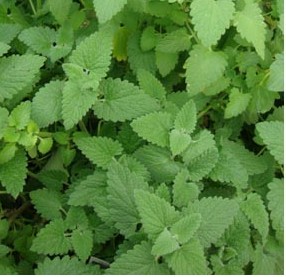
N is for Nettle - Pagan Blog Project


After a lengthy hiatus I am finally back to the Pagan Blog Project and this week I am writing about Nettle.  An amazing herb full of power and potential, Nettle can be eaten, brewed into a tea (or wine or beer!), used for protection and so much more!

Common Folk Names: Stinging Nettle, Common Stinging Nettle, Ortiga Ancha, Devil’s Apron, Devil’s Leaf
Botanical  Name: Urtica dioica
Gender: Masculine
Planet: Mars
Element: Fire
Powers: Exorcism, Protection, Healing, Lust
Animal: Serpent
Gemstone: Ruby or Fire Opal
Some Associated Deities: Thor, Pluto, Hades, Horus, Osiris, Vulcan, Yama
Habitat: Nettle grows all over the world in moist, shady places as well as in gardens, along fences, walls and roadsides. It is a bristly plant growing from 2 to 7 feet high with pointed leaves and small greenish flowers which bloom from July to September.

While you can easily grow nettle yourself it will quickly take over an area so it is probably easier to purchase it from a local herbal store or if you must grow your own, grow it in a large pot to keep it from invading the entire yard!

Medicinal Properties: Histamine, astringent and diuretic. Nettle has been used to treat gout, painful joints, anemia, urinary tract problems, hay fever, insect bites, as an expectorant, a laxative and more.

Nettle is high in iron, vitamins A and C and also rich in protein which is one of the reason they are used to treat anemia.  Nettle can be used to make wine or beer as well as many different food items.

Nettle can be used to make a hair rinse which will leave hair super shiny and strong without stripping the natural oils from the hair. It restores color as well as the health if the scalp.

Before flax, Nettle was used to make thread, yarn and cloth; Nettle is supposed to be stronger than flax and resemble hemp in appearance. 

Magically Nettle is used to ward of ghosts and spirits, keep evil out of the home and facilitate a quick recovery.  Brooms made of Nettles are used to sweep evil out of an area. To keep evil out of the home, sprinkle Nettle around the house and to ward off ghosts, carry nettle in your hand.  To help a sick person’s recovery place a bowl of freshly cut nettle under their bed. To keep negativity away wear Nettle in an amulet and to remove a curse and send it back stuff a poppet with nettle or carry nettle in a sachet. To consecrate an Athame, heat the blade and then put it into an herbal bath made of nettles.

According to Scott Cunningham, Mexican spiritualists recommend Nettle in purification baths because it is “more carnivorous” that other herbs and will work more efficiently.

Interesting Nettle Lore: According to Maurice Zigmond in his book Kawaiisu Ethnobotany, children of the Kawaiisu tribe of Southern California who wanted to study witchcraft had to walk through nettles in preparation for the practice (of witchcraft). (The first areas of study that I was passionate about, which I explored in depth while attending Arizona State, were Archaeology and Native American studies so the above lore was one more reason for me to write about Nettle).

Sources

Books:
Scott Cunningham: Encyclopedia of magical Herbs
Maurice Zigmond: Kawaiisu Ethnobotany

Websites:
http://www.merciangathering.com/nettle.htm (recipes for Nettle Wine and Beer are here)


Friday, February 22, 2013

Pagan Blog Project: D is for Dandelion


Dandelions are the bane of existence to many a suburban yard, they sprout up almost overnight and can easily take over if you are not diligent. Of course the fact that it is so fun to blow the seeds of the dandelion into the wind doesn't help, especially if you live in a neighborhood full of kids - or adults like me who are just big kids in disguise!

My back yard is big and full of all sorts of things including trees, shrubs, grass, flowers, clover, rocks and of course, dandelions.  Fortunately for me, no one seems to mind that we don’t have a pristine back yard.  The dogs and kids have run wild there for 17 years so it has served us well!

The past few seasons have been interesting for my family as I have slowly introduced them to more magical fare in the kitchen. I am blessed with a loving family who just go with the flow, so when I toss dandelion greens into a salad or send the kids out to fill a bucket full of dandelion flowers so I can make Dandelion wine, no one even blinks. It makes me smile just to write that because there really isn't much I could say (or do) that would surprise my family.

This week I chose to write about the Dandelion and hope that the information here will cause people to think a little more kindly of this versatile little plant.

Many people don’t realize that the dandelion is edible.  It has a high concentration of Vitamins A, B, C and D and is also high in Iron, Calcium and Potassium. Who knew? The greens can be tossed into a salad, blanched or steamed like spinach and eaten as a vegetable, the root can be dried (or roasted) and ground up to make tea (which can taste very similar to coffee) and the flowers can be used to make a lovely wine.  When picking dandelion leaves for a salad, be sure to use only young leaves, older leaves can become bitter.
 
Magical Correspondences:
Gender: Masculine
Planetary Ruler: Jupiter
Elemental Ruler: Air
Deity:  Hecate

Magical Properties: Divination, Wishes, Calling Spirits

According to Scott Cunningham you can use the dandelion to send a message to a loved one. To do this you visualize your message and blow the dandelion head that has gone to seed in the direction of the person to whom you want to send you message.

He also writes of some other fun things to do with a dandelion head that has gone to seed:
To see how long you will live, blow the seeds of a dandelion, the number of seeds left on the seed head indicates how many years you will live and to tell the time, blow three times on the seed head, the number of seeds left is the hour.

According to the Real Witch’s Garden by Kate West, tea made with dandelion root is used to aid the liver, kidneys and bowels as well as to cleanse the system.

Karen Harrison of The Herbal Alchemist’s Handbook wrote that the magical uses for dandelion root tea are to bring psychic impressions and dreams and she also states that adding Dandelion to an herbal amulet brings abundance in “Financial Acumen” and opportunity.

Here is an easy recipes for turning the humble dandelion into wine:

Dandelion Wine
This recipe is from Allrecipes.com
Makes 4 quarts

 1 quart yellow dandelion blossoms, well rinsed
 1 gallon boiling water
  ¼ ounce package active dry yeast
 8 cups white sugar
 1 orange, sliced
 1 lemon slice

1. Place dandelion blossoms in the boiling water, and allow to stand for 4 minutes. Remove and discard the blossoms, and let the water cool to 90 degrees F (32 degrees C).

2. Stir in the yeast, sugar, orange slices, and lemon slice; pour into a plastic fermenter, and attach a fermentation lock. Let the wine ferment in a cool area until the bubbles stop, 10 to 14 days. Siphon the wine off of the lees, and strain through cheesecloth before bottling in quart-sized, sterilized canning jars with lids and rings. Age the wine at least a week for best flavor.

Notes: Be sure that you use only pesticide free dandelions and that you wash them well before you put them in the pot.

Dandelion Tea
I found a couple of great sites which had detailed directions for harvesting and roasting the dandelion roots. The links are below.

Sources:
The Real Witch’s Garden by Kate West
Encyclopedia of Magical Herbs by Scott Cunningham
http://www.harvesthaven.com/healthaids/dandelion.html
http://allrecipes.com/recipe/dandelion-wine/


Friday, February 15, 2013

Pagan Blog Project: D is for Dragon’s Blood


One of my earliest memories of witchcraft was of a spell that I overheard on TV, I was very young and it was a typical or shall I say a stereotypical list of ingredients that of course all witches must have on hand (at least in the pop culture of the late 60’s), anyway, the list went something like this:

Eye of newt (of course – that is in all the good spells- right?)
Wing of bat
Graveyard dust
Coffin nails
Dragon’s blood
And a hair from a werewolf plucked at the stroke of midnight on a full moon (that sounds downright dangerous to me!)

Now, unlike many of my young friends, I was not afraid of witches, I was intrigued. Was this real? Did these types of ingredients actually go into a magical spell? Why? What did they do? Where could I get a real dragon and how much blood was called for? Fortunately, I soon realized that Dragon's Blood didn't come from a real dragon - much to my relief!

During the first 10 years of my life we moved a lot, we were gypsies, moving at least once and sometimes twice a year and the people my mother associated with were amazing. There were all gypsies as well as artists, musicians and magical people.  It was during this time that I was first introduced to magic, the Tarot, and herbalism, though I had no idea what I was learning then.

As I got older I learned more about magic, witchcraft and my own gifts and I also became more familiar with some of the more interesting magical ingredients. This week I thought I would write about Dragon’s Blood, one of the more romanticized ingredients in a witch’s cupboard.

Gender: Masculine
Planet: Mars
Elementary Ruler: Fire


The Dragon’s Blood we buy today is typically a red resin from the Daemonorops Draco tree which is a type of palm tree native to Indonesian islands as well as from the Dracaena Cinnabari  tree native to Socotra. It is found in resin and powder forms as well as in incense and added to red ink to make Dragon’s Blood ink.

Some of the many uses attributed to Dragon’s Blood are: curing diarrhea, lowering fevers, helping to heal ulcers in the mouth, throat and intestines, as well as for treating eczema. It was even thought to have astringent properties and used to treat wounds.

Magically, Dragon’s Blood is used to cleanse a space of negativity, for banishing spells, protection, to add a little extra power to a spell, for love and when mixed with red ink it can be used to create magical seals and to ink talismans.

Dragon’s Blood resin was used to create a varnish that violin used to give their violins their signature color, and it is still used in this way today.

In Scott Cunningham’s Encyclopedia of Magical Herbs he relates that a stick of Dragon’s Blood tree placed under the pillow will cure impotency.  A woman can burn Dragon’s Blood resin while seated in an open window to entice an errant lover to return. He also states that Dragon’s Blood is a “powerful protectant when carried, sprinkled around the house, or shouldered as incense.”

I like to keep Dragon’s Blood on hand, you never know when you are going to need to add a little extra oomph to a spell!

Here is a great recipe for a Dragon’s Blood Witch’s Ink that I found at www.mdidea.com: right here 

 Witches Ink:

 4 oz. Transparent Alcohol (vodka works well)
 2 tsp. Dragons Blood (powdered resin)
 1 tsp. Pure Vanilla (tincture)
 1 tsp. Lavender (tincture)
 1 cinnamon stick
 2 cloves (optional)

Mix all together in a tightly sealed jar. Shake until mixed well. Place in dark cool cabinet. Bring out once a day and shake up to stir for seven days. Test the ink by placing your pen, needle or toothpick in the ink, then test on paper. If color is dark enough for you it's ready to use. If you would like it even darker then add more resin and repeat the shaking. Test every day until you have the desired color hue.

Sources:
Cunningham’s Encyclopedia of Magical Herbs by Scott Cunningham

Friday, February 1, 2013

Pagan Blog Project: C is for Catnip


Most of us are familiar with Catnip. It something that many cats LOVE! There is nothing cooler than watching your cat roll around on the floor with a catnip filled toy. My cat is all blissful when I give her catnip toys, she gets frisky and acts like she did as a kitten (16 years ago!). One of the benefits of giving your cat catnip is that is creates a psychic bond between the two of you.


Catnip is a fairly easy to grow perennial herb from the mint family. Common catnip can grow 3 - 5 feet high and has white flowers with purple spots.  It likes partial shade but grows well in full sun.  If you plan on growing this near your home it is recommended that you put chicken wire cages around young plants until they become established to protect them from cats. Also noted, cats will generally leave catnip plants alone unless the leaves or branches are damaged. Damage to the plant releases the chemical that attracts cats.

There are other uses for catnip, both magical and medicinal, and they aren't for kitty!

Before I get to those, here is some magical information regarding Catnip.

Gender: Feminine
Planet: Venus
Element: Water
Deities: Bast

Other than intoxicating your cat, catnip can be used in love spells, to attract good spirits and good luck, as well as in spells for beauty and happiness. All in all, catnip seems to be a good herb to have around. 

Fun: according to Scott Cunningham’s Encyclopedia of Magical herbs, If you hold catnip in your hand until it is warm and then hold anyone else’s hand; they will forever be your friend as long as you keep the catnip used in the spell, also large catnip leaves have been pressed and used as bookmarks in magical texts and Book of Shadows. 

Other Magical uses:

When grown near your home, catnip attracts good spirits and luck. The nice thing about catnip is that is an attractive plant with pretty little flowers, the drawback, it is from the mint family so it will grow wild if you let it.

Add catnip in your love sachets, mojo bags, and poppets to attract love.

Medical uses:
(Please note that I am NOT a physician, nor am I providing medical advice, use catnip at your own risk)

Medicinally catnip has been used to treat respiratory infections, to reduce fever, as a decongestant, to help ease a cold of the flu, to reduce menstrual cramps and applied externally to cuts. It has also been used to treat colicky babies, headaches, indigestion and stress related conditions and even reduce red-eye.  Taken as a tea, catnip can be used as a sleep aid.

Caution: Catnip can cause uterine contractions and stimulate menstruation so do not take if you are pregnant!!

Basic Catnip Tea
Add 1 Cup of boiling water to 1-2 teaspoons of catnip
Steep for 10-15 minutes
I would add a teaspoon of honey.

If you would like more information on growing and harvesting catnip visit:

Additional sources:
Encyclopediaof Magical herbs by Scott Cunningham

Friday, January 25, 2013

Pagan Blog Project – B is for Buckthorn


I love working with herbs. When I first started working with them I went to Ebay and bought a huge assortment of herbs to use in my work. While some of the small, carefully labeled packets are still unused I have never regretted that initial purchase. There is nothing worse than not having the right ingredients for whatever I am working on be it oatmeal cookies, a good luck amulet or a spell bottle.
This week I chose to write about Buckthorn (Rhamnus cathartica ) as I am working on protection amulets for my Etsy Shop and Buckthorn happens to be one of the necessary ingredients for these particular amulets. 
There are many type of Buckthorn, including both deciduous and evergreen varieties.  The Rhamnus cathartica species, also called Common Buckthorn, is one of the deciduous types.
This particular shrub grows up to 25 feet tall, has green leaves and gray/brown bark.  The black berries are slightly poisonous to humans but Buckthorn is still used to make an herbal laxative.
Buckthorn’s magical properties are: protection, wishes & good luck, legal matters and exorcism. Branches of the buckthorn, when place near doorways drive away the magical workings of others.
Element: Water
Planet: Saturn
Gender: Feminine

Parts used: Bark, branches, leaves and berries. Scott Cunningham notes that the bark must be aged at least two years before using internally.

Medicinally Buckthorn was used similar to Syrup of Ipecac is today, as a purgative for children however due to the severity of the reaction it fell out of use with humans. Buckthorn has also been used as a laxative in the form of teas, tonics or syrups with sweet ingredients added to make it more palatable. 
In addition to its magical and medicinal properties, Buckthorn bark and leaves are used to make yellow dye to color fabrics and if collect before they ripen its berries, when mixed with gum-arabic and limewater, form the pigment ‘Sap or bladder green” for water color painters.
Scott Cunningham relays the following legend in his Encyclopedia of Magical herbs:
It is said that if you sprinkle buckthorn in a circle and dance within it under a full moon, an elf will appear. The dancer must notice the elf and say “Halt and grant my boon!” before the creature flees. The elf will then grant one wish.  
Perhaps this will be part of my next full moon ritual, if I miss the elf at least I’ll have fun dancing and he’ll have fun watching from his hiding spot.
Sources for this article: